
EXAVER UV-LAALTA 2027

Keynote Speakers

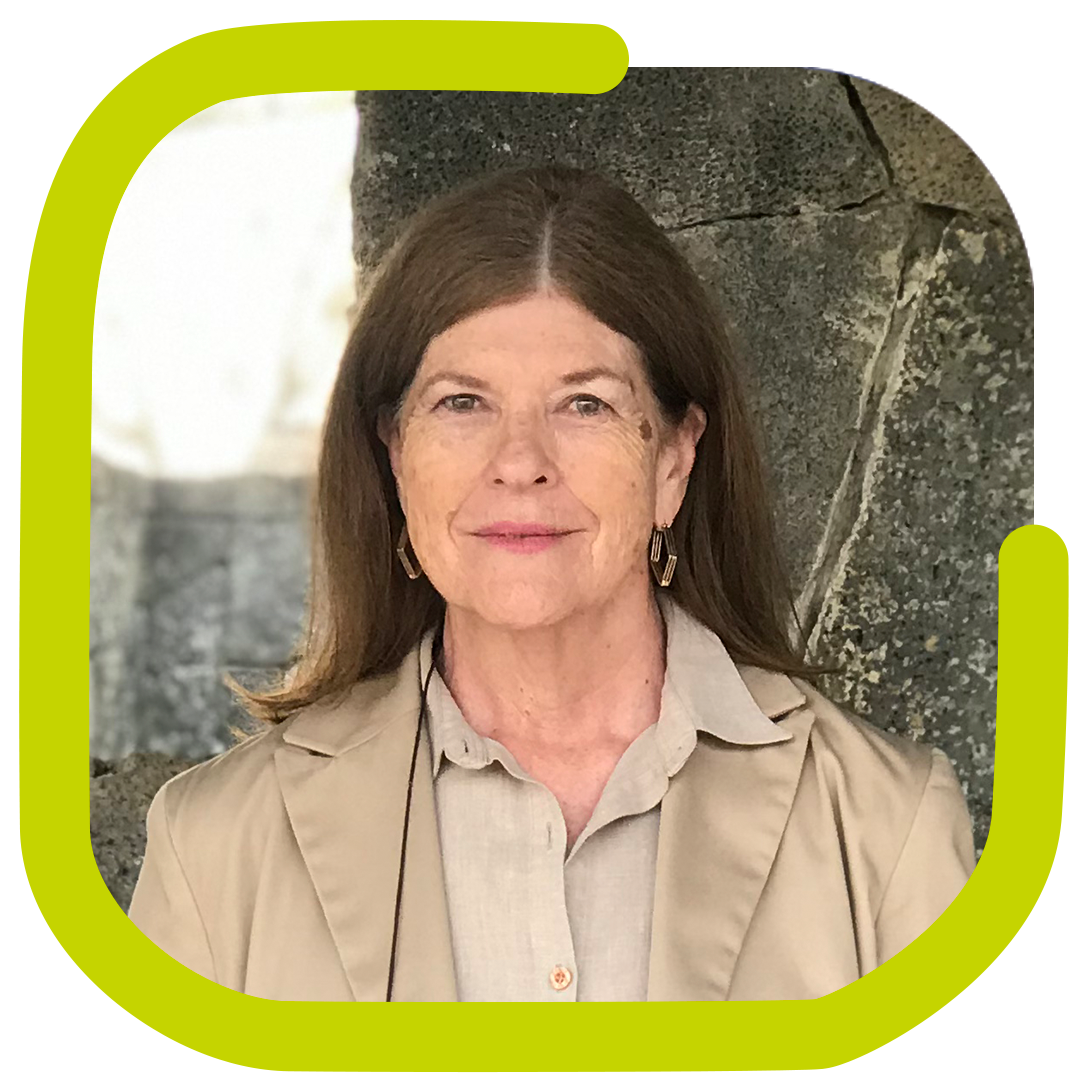
Photograph of Dr. Nick Saville

The impact of language policies on language assessment practices within educational contexts

Dr. Nick Saville
Cambridge Assessment English
Abstract
This talk examines how language policies at international, national and local levels shape assessment practices in educational contexts. Building on the CEFR Companion Volume (Council of Europe, 2020) and Jones and Saville’s systemic approach to learning-oriented assessment (2016), the talk considers how assessment functions within wider ecosystems of language education and how frameworks of reference can support the principled adaptation of policy in local contexts. It relates this argument to recent work on comprehensive learning systems, in which policy aims, curricular goals, classroom practices, teacher development and assessment design are treated as interdependent components that are developed through the active involvement of diverse stakeholders (see Figueras et al., 2022). From this perspective, assessment is not a discrete technical endpoint but a central mechanism through which language policy is interpreted, enacted and evaluated in local contexts. Examples will be used to illustrate this, including Mexican projects such as SEPAinglés and EXAVER.
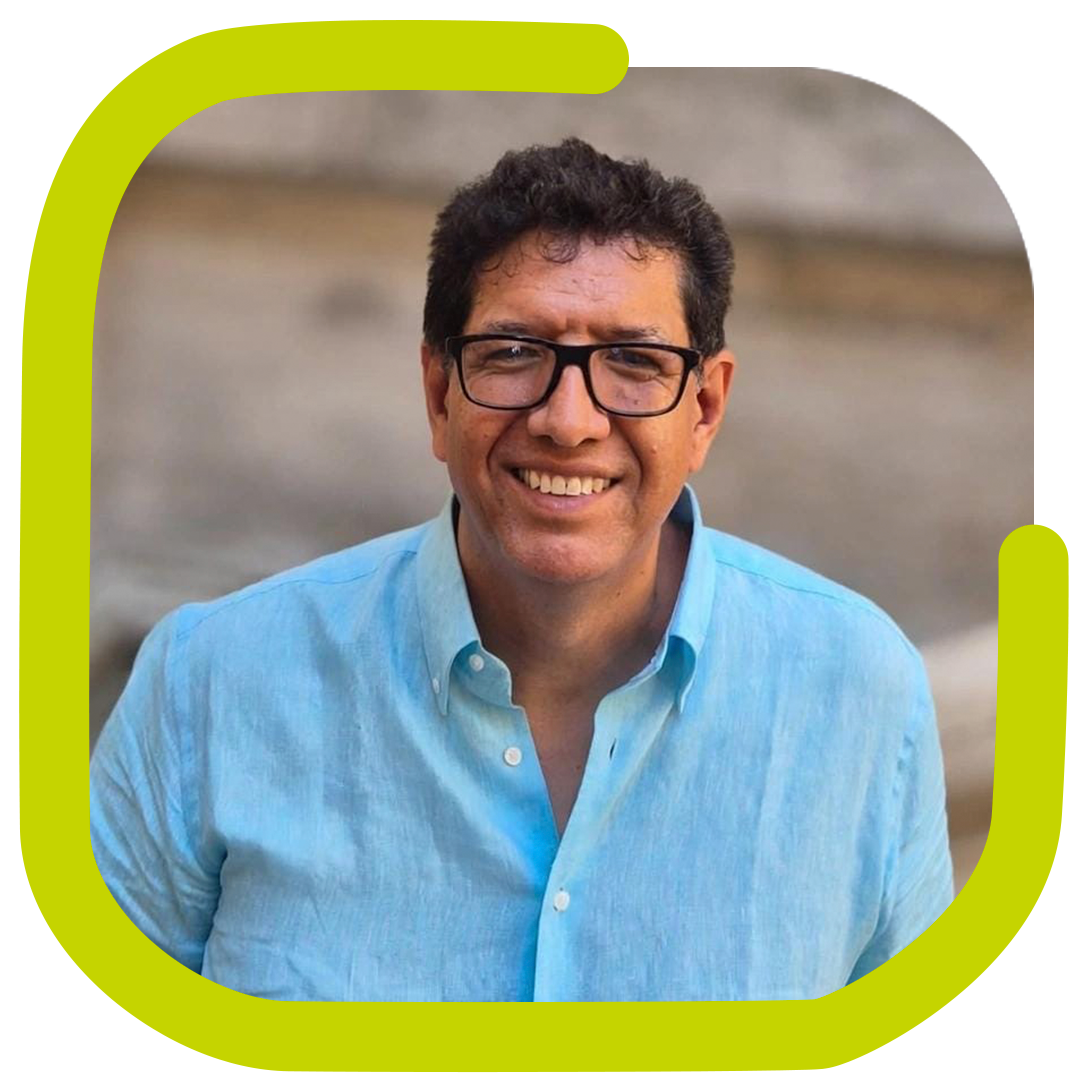
Photograph of Dr. Mario E. López-Gopar

DECOLONIZING (INDIGENOUS) LANGUAGE ASSESSMENT IN AI TIMES

Dr. Mario E. López-Gopar

Universidad Autónoma Benito Juárez de Oaxaca
Abstract
Language learning and teaching in Mexico is rooted in the discourses and ideologies emerging from colonialism and the current Eurocentric hegemony. These colonial ideological discourses, disseminated through social media and IA platforms, position certain languages over others through the use of language assessment practices. Hence, the purpose of this presentation is to challenge these colonial ideological discourses by interrogating the current assessment practices in Mexico used to discriminate against people. Based on my longitudinal critical-ethnographic-action-research work that I have conducted with language teachers in Oaxaca, Mexico, I present their views and the material consequences they have suffered due to standardized tests and the narrow view about proficiency in Indigenous languages. Specifically, I present the working principles of Asociación Mexicana de Evaluación de Lenguas Indígenas (AMELI) to illustrate the need to engage minoritized peoples in language assessment practices should we want to use assessment to validate rather than discriminate against people.
Photograph of Mr. Graham Seed

USING THE CEFR FOR COMMUNICATIVE LEARNING AND ASSESSMENT IN THE LATE 2020S

Mr. Graham Seed

ALTE (logo)
Abstract
Originally designed in Europe but now used worldwide, including in Latin America, the CEFR provides a shared framework for communicative language learning, teaching and assessment. This presentation reviews key developments in the CEFR Companion Volume (2020), including a shift from separate skills (reading, writing, listening and speaking) to modes of communication: reception, production, interaction and mediation. It explores how CEFR descriptors can be used to design communicative assessment tasks and highlights guidance from the Handbook of Aligning Language Education with the CEFR. The presentation then considers how communicative competence is evolving in a world shaped by AI and digital technologies. As routine tasks become increasingly automated, greater importance may be placed on skills that remain inherently human, including oracy, mediation, collaboration, and plurilingual and pluricultural competence. The talk argues that these areas are likely to play an increasingly central role in language education and assessment in the years ahead.
Photograph of Dr. Patricia Grounds Reynolds

A NEVER-ENDING PROFESSIONAL JOURNEY…

Dr Patricia Grounds Reynolds

British Council (logo)
Abstract
This presentation will first take us on a rapid tour across decades of language-assessment research, briefly tracing shifts from the c.1990s emphasis on e.g. reliability, validity, authenticity and construct definition, through the c.2000s critique and expansion of theoretical models, into the c.2010s focus on classroom-embedded assessment and test-taker perspectives. It then mentions current concerns, e.g. inclusion, technology, fairness, and the perennial challenge of assessment literacy as a never-ending professional journey. Then, these trends are linked to the evolution of EXAVER at the Universidad Veracruzana, and how research and validation practices here have mirrored national and international debates on quality, localized test development and stakeholder engagement. The session closes with reflections on the rich professional growth emerging from long-term institutional and personal involvement in assessment projects. EXAVER has shown, over the last 27 years, that sustained engagement with research, validation and training can significantly improve assessment literacy and support institutional development.
Photograph of Dr. Ben Naismith

AI IN SPEAKING ASSESSMENT: VALIDITY AND FAIRNESS IN SCORING PRONUNCIATION AND FLUENCY

Dr. Ben Naismith

Duolingo (logo)
Abstract
Advances in artificial intelligence offer new possibilities for automated scoring for speaking subconstructs that have historically been challenging to define and assess. This talk examines these developments through two case studies from the context of the Duolingo English Test (DET): the development and validation of pronunciation and fluency scorers. Both cases illustrate how linguistic theory, theoretically motivated speech features, and expert human judgments inform construct representation and model evaluation. The pronunciation case highlights the role of intelligibility in guiding scorer development and the importance of examining potential bias. The fluency case explores how interpretable speech features and newer end-to-end neural representations complement one another in predicting expert ratings and capturing different dimensions of fluency. The talk closes with a discussion of balancing interpretability and predictive performance, supporting validity and fairness, and the continuing role of human expertise in the future of AI speaking assessment.

Who is next?

Find out soon.

Abstract
The abstract for this presentation will be added soon.